
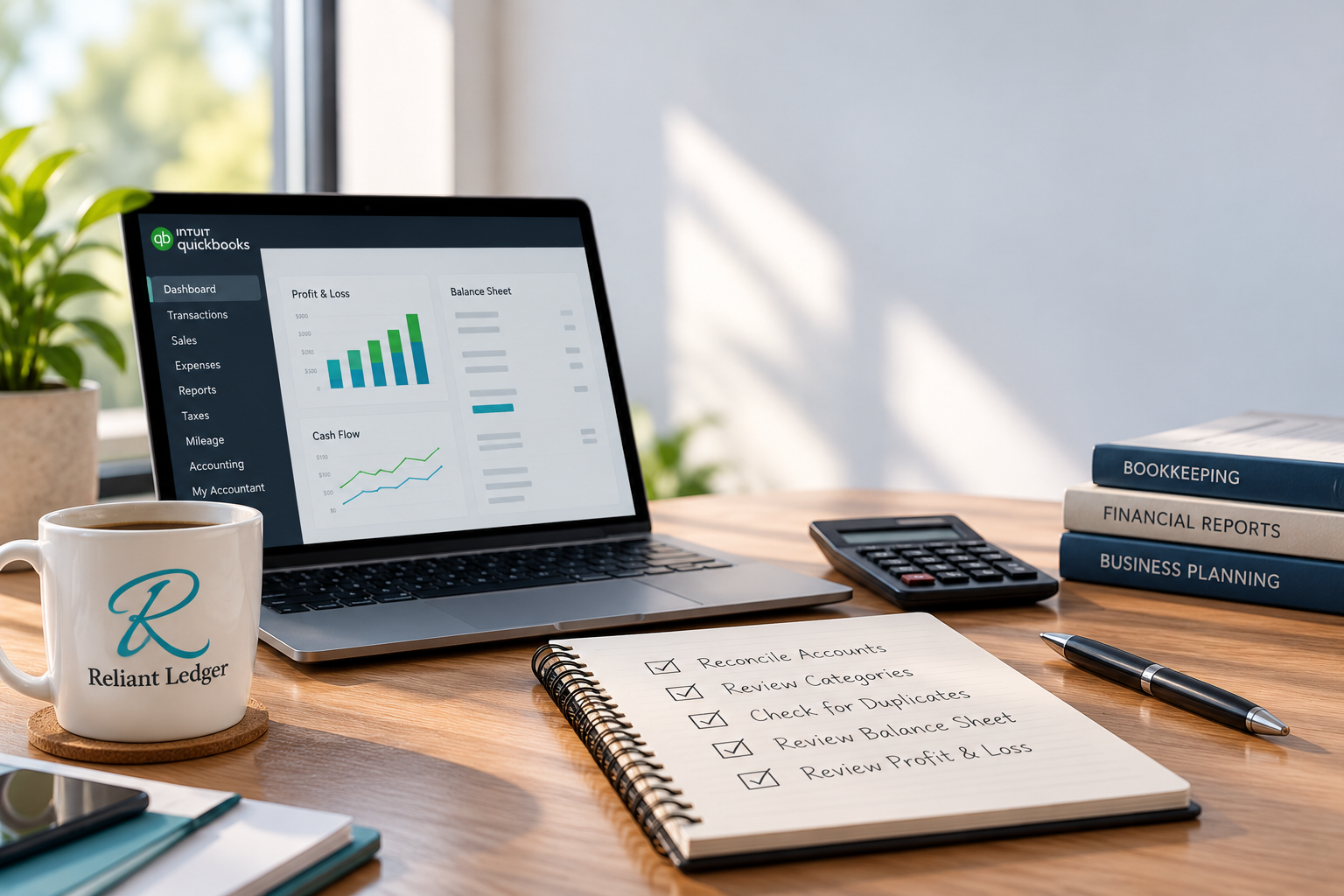
5 Bookkeeping Tasks to Complete Before Year-End
Your bookkeeping may be up to date, but is it accurate? Discover five essential year-end bookkeeping tasks to help small-business owners identify errors, review financial records, and prepare for tax season with confidence.
Your Books Are Up to Date—but Are They Accurate?
Having your bookkeeping caught up is a good start. But how do you know your financial records are accurate?
As we enter the final quarter of 2026, many small-business owners are beginning to think about getting their books ready for tax season.
Maybe you've entered all your transactions into QuickBooks Online. Your bank feeds are connected, your invoices are recorded, and your expenses have been categorized.
Everything looks current.
But here's an important question: Are your books accurate?
Having your bookkeeping up to date doesn't necessarily mean your financial information is correct. Transactions can be entered into the wrong categories, expenses can be duplicated, and account balances can be incorrect even when everything appears organized.
These errors can affect your financial statements and the decisions you make based on them.
Before the year ends, here are five areas worth reviewing.
1. Make Sure Your Bank and Credit Card Accounts Are Reconciled
Connecting your bank and credit card accounts to QuickBooks Online makes recording transactions easier, but it doesn't replace reconciliation.
Reconciliation is the process of comparing the transactions recorded in your bookkeeping system with your actual bank or credit card statements.
This process helps identify missing transactions, duplicate entries, and other discrepancies.
For example, a contractor might have all their bank transactions downloaded into QuickBooks, but a payment entered manually could also be added from the bank feed. Without reviewing the records, that expense could be counted twice.
What to check:
Are all business bank and credit card accounts reconciled through the latest available statements?
Do the transactions in QuickBooks agree with the statements?
Have any differences been investigated and corrected?
If you're several months behind, start with the oldest unreconciled statement and work forward one month at a time.
Intuit's year-end reconciliation guidance emphasizes the importance of reconciling financial accounts before closing out the year.
2. Review Transactions for Incorrect Categories
Recording an expense is only part of the bookkeeping process. It also needs to be classified correctly.
This is particularly important for contractors and service businesses because different expenses can affect how profitability is reported.
Consider a plumbing contractor who purchases materials for a customer's job. Depending on the business's accounting practices, those materials may belong in a direct job-cost category rather than general operating expenses.
If they're recorded incorrectly, the business's gross profit may not accurately reflect the cost of completing its work.
Equipment purchases deserve attention, too. A significant equipment purchase may need to be recorded as an asset rather than an ordinary expense, depending on the circumstances and applicable accounting and tax rules.
What to check:
Are materials and subcontractor costs recorded in the appropriate categories?
Are equipment purchases classified correctly?
Are personal expenses separated from business expenses?
Are there transactions sitting in Uncategorized Expense or Ask My Accountant that still need attention?
SCORE’s 8 Step checklist for closing your books at year-end recommends reviewing expense categories and keeping personal and business transactions separate.
If you're unsure how a significant purchase should be treated, consult your accountant or tax professional before making adjustments.
Correct categorization helps produce financial reports that better reflect how your business is performing.
3. Look for Duplicate or Missing Transactions
Even when you're reviewing transactions regularly, mistakes can happen.
A transaction might be entered manually and then added again from the bank feed. A deposit could be recorded twice, or a cash purchase might never make it into the books.
These mistakes can affect your reported income, expenses, and account balances.
For contractors, it's also important to make sure customer payments are recorded correctly. Payments received against outstanding invoices should be applied appropriately so income isn't duplicated.
What to check:
Are there duplicate expenses or deposits?
Have cash purchases and payments been recorded?
Are customer payments properly applied to invoices?
Are transfers between business accounts recorded as transfers rather than additional income or expenses?
QuickBooks Online provides tools for reviewing transactions, but the information still needs to be checked for accuracy.
Taking time to investigate unusual transactions now can prevent additional clean-up work later.
4. Review Your Balance Sheet—Not Just Your Profit & Loss Statement
Many business owners pay close attention to their Profit & Loss Statement because they want to know whether their business is making money.
But the Balance Sheet is just as important.
Your Balance Sheet shows your business's assets, liabilities, and equity at a specific point in time.
It can reveal issues that may not be obvious when reviewing income and expenses alone.
For example, a contractor may have purchased a work truck using financing. The truck and the related loan generally need to be reflected appropriately in the financial records.
Likewise, loan payments should be separated between principal and interest rather than automatically recording the entire payment as an expense.
What to check:
Do loan balances agree with lender statements?
Are business credit card balances accurate?
Are outstanding customer invoices and unpaid bills correct?
Are there unusual balances in Undeposited Funds or other accounts that need investigation?
Are owner contributions and withdrawals recorded appropriately?
If you'd like to better understand how these reports fit together, check out my article, “How Your P&L, Balance Sheet, and Cash Flow Statement Work Together.” It explains how each statement provides a different view of your business's finances and why reviewing all three gives you a more complete financial picture.
Reviewing your Balance Sheet throughout the year helps you better understand your business's financial position and identify potential problems before tax season.
5. Review Your Profit & Loss Statement for Anything Unusual
Once your transactions have been recorded, categorized, and reconciled, it's time to look at the bigger picture.
Your Profit & Loss Statement shows your revenue and expenses over a period of time. It can help you evaluate profitability and identify changes in your business.
Rather than looking only at the bottom line, compare your results from month to month.
For example, suppose an electrical contractor notices that revenue increased during the summer, but gross profit decreased.
That doesn't automatically mean something was recorded incorrectly. Material costs may have increased, labor may have been more expensive, or certain jobs may have been less profitable.
But it does mean the numbers deserve a closer look.
What to check:
Does reported revenue agree with what you know about your business activity?
Are direct job costs being recorded consistently?
Have any operating expenses increased unexpectedly?
Does your gross profit make sense based on the work completed?
Are there unusual changes compared with previous months?
An unexpected number isn't always an error. Sometimes it's valuable information about what's happening in your business.
Accurate financial information helps business owners evaluate profitability, understand cash flow, and make informed decisions.
That's why reviewing your financial statements is about more than finding bookkeeping mistakes. It's also about understanding what your numbers are telling you.
Accurate Books Help You Finish the Year With Confidence
The final quarter of the year is a good time to review your bookkeeping before preparing for tax season.
If your books are behind, the first step is getting caught up. If they're current, the next step is making sure they're accurate.
For additional guidance on getting organized, check out my previous article, “Behind on Your Bookkeeping? How to Catch Up Before Year-End.”
Accurate bookkeeping helps you provide reliable information to your tax professional. But its value goes beyond preparing a tax return.
When you can trust your financial reports, you're better equipped to evaluate profitability, plan for expenses, and make informed decisions about your business.
And as you begin thinking about your goals for 2027, knowing where your business stands financially is a good place to start.
Business owners who want to strengthen their financial knowledge can also explore educational resources through SCORE and the Kansas Small Business Development Center at Wichita State University. Both organizations offer resources to help small-business owners better understand and manage their businesses. The Kansas SBDC also provides business advising and training opportunities.
Need help getting your books organized and accurate?
At Reliant Ledger, I partner with contractors and service businesses to provide reliable bookkeeping, financial reporting, and QuickBooks Online support.
Whether you're behind on your bookkeeping or simply want greater confidence in your financial records, I'd welcome the opportunity to discuss how I can help.
Better books. Better decisions. Better business.